


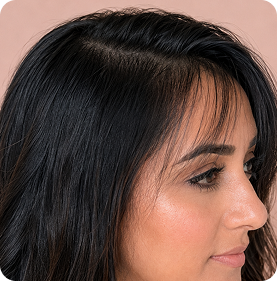
1Week 1
The cuticle becomes rougher and less uniform.

Curls Locked In. All Day. Always.

Larger surface for bigger volume and faster styling on thick/long hair.
 BUYER PROTECTION (60-DAY GUARANTEE)
HAIR AND SCALP EDUCATION
Heat styling, extensions and wigs can hide the damage until thinning starts to show around the hairline. Repeated heat weakens strands. Extensions pull at the roots. Wig adhesive grips delicate edges. And when that cycle continues long enough, the result may be more than breakage: the follicles can become permanently damaged.
Here’s how heat styling, extensions and wigs can damage your natural hair,, which warning signs matter and how to build a more intentional after-styling routine.
Discover a scalp-first routine →
Most styling-related damage is cumulative.
The cuticle becomes rougher and less uniform.
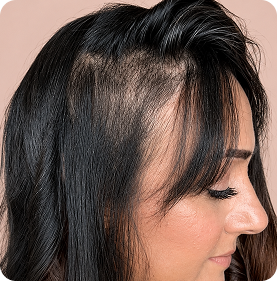
The strand loses moisture more easily.
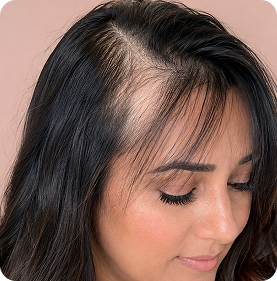
Hair becomes more vulnerable to tangling and splitting.
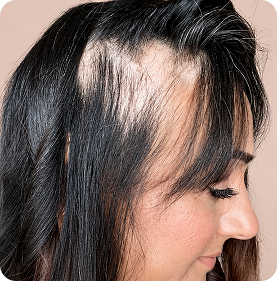
Weakened sections eventually snap.


It can begin with a flat iron used slightly too hot. An extension installation that feels tighter than usual. A wig grip that repeatedly rubs the same area. Or adhesive that pulls at delicate hairs every time the lace is removed.
The important point is that not every form of “hair loss” is the same.
Heat primarily damages the visible hair shaft. Extensions and tightly secured wigs can also place mechanical stress on the roots. Understanding that difference is essential when deciding how to care for the hair and scalp.
The Three Types of Styling Stress
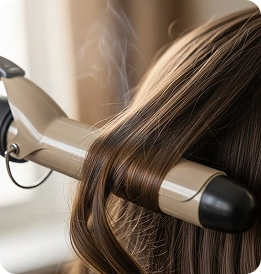
Weakens the hair, leaving it dry, rough and more likely to split or break. (see more)
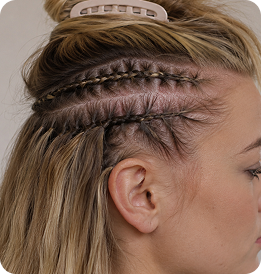
Pulls on the strand and follicle. Persistent tension can contribute to alopecia. (see more)
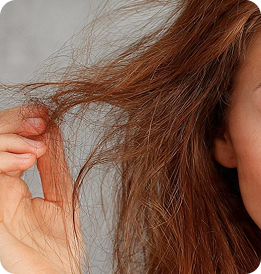
Occurs when hair repeatedly rubs against wig caps, clips, bands, extensions, pillows or neighboring strands. It can weaken the cuticle and contribute to breakage. (see more)


Natural hair may be braided tightly, covered by a wig and then repeatedly manipulated around the hairline. Extensions may add tension while the exposed lengths continue receiving heat.
That combination is why aftercare must address more than the finished appearance.


WHAT REPEATED HEAT DOES
 MedullaCortexCortex cellCuticle
A healthy cuticle helps the strand retain moisture and protects the internal structure of the hair.
Repeated exposure to high temperatures can disturb this protective surface.
Too much heat can crack and weaken the hair’s protective outer layer, causing it to lose moisture and break more easily during brushing and styling.
Laboratory research examining repeated blow-drying found progressively greater surface damage as the temperature increased. The highest-temperature condition produced visible cracks, holes and damaged cuticle borders. A published hair-shaft study also found that dryer distance and movement affected the severity of surface damage.
WHEN VOLUME ADDS WEIGHT
Extensions create instant length and volume, but your natural hair pays the price. Every added strand puts extra weight and tension on the hair and roots supporting it.
When the installation is too tight, too heavy or worn without adequate breaks, the repeated pulling can cause:


“An extension installation should feel secure. It should not feel painful.”—Anna Brooks★★★★★
COVERAGE CAN STILL CREATE CONTACT
Wigs can reduce the need to manipulate and heat-style natural hair. They can also provide valuable cosmetic coverage.
However, a wig is not automatically risk-free.
The complete installation matters: how tightly the natural hair is braided underneath, how the unit is secured, where clips or combs are positioned, what type of liner is used and how adhesive is applied and removed.


Tension from tight braids beneath the unit

Weight from added hair

Repeated rubbing from caps, liners, bands or clips

Breakage during adhesive removal

Follicle blockage and inflammation associated with glue

Irritation or allergic contact dermatitis from certain adhesives

Reduced ventilation under some wig foundations
Heat, extensions and wigs can make hair look fuller while the natural hair underneath becomes weaker. The damage often starts long before it becomes impossible to ignore.
CLICK TO SEE THE DAMAGE
Hair feels unusually dry, rough or brittle

More split ends and short, broken strands

Hair tangles more easily than before

Curls no longer return after washing

Ends appear thin, uneven or transparent

More hair snapping during brushing or styling
WHY SHAMPOO, HAIR MASKS AND ORDINARY SERUMS ARE NOT ENOUGH
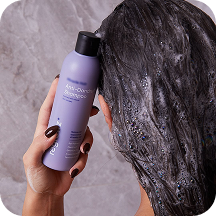
It removes oil, sweat and product buildup, but it is not designed to remain on the scalp and provide continuous, targeted care.
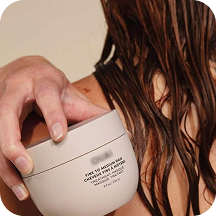
They can make dry, heat-damaged hair feel softer and smoother, but they mainly coat and condition existing strands. They cannot address the scalp-care step missing underneath extensions, wigs and frequent styling.
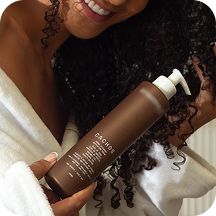
Many serums are formulated to reduce frizz, add shine or temporarily smooth damaged strands. If the product is applied only to the lengths, never reaches the scalp and contains no ingredients selected for root and scalp support, it is not providing focused scalp care.
Four Ingredients

supported by a human clinical trial
In a six-month randomized study involving 100 women with alopecia, the rosemary-oil group experienced a significant increase in hair count at six months.

studied using human hair follicles
Laboratory research using cultured human hair follicles found that red ginseng extract promoted hair-shaft elongation and affected cells involved in the hair-growth cycle.

promising early-stage follicle research
In a human study, topical Thuja orientalis extract stimulated an earlier transition into the active growth phase and increased the number and size of hair follicles.

essential for building hair
Biotin, also known as vitamin B7, plays an essential role in normal hair health. Hair thinning and hair loss are recognized signs of biotin deficiency, which is why biotin is widely used in formulas designed to support stronger, thicker and fuller-looking hair.
After reviewing what a complete scalp serum should contain, SLEEQ Hair Growth Serum 4-in-1 stands out as a strong option.

Instead of functioning like another smoothing serum for the lengths, SLEEQ brings rosemary, Korean ginseng, thuja leaf and biotin together in one lightweight, leave-in formula.
We gathered below the stories of women who used Sleeq 4 in 1 serum.

The precision applicator delivers the serum directly to the hairline, part and scalp, where focused care is needed. Its non-oily, non-sticky texture also allows it to fit into a regular styling routine without leaving the hair flat or greasy.
We gathered below the stories of women who used Sleeq 4 in 1 serum.Real stories from women seeing stronger, fuller, healthier-looking hair.
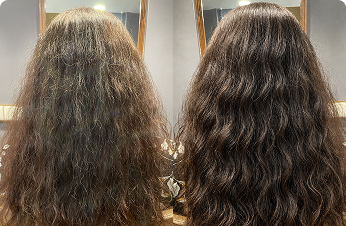
“My hair had so much breakage from straightening and frequent heat. After using SLEEQ regularly, it feels stronger, looks denser, and I’m noticing far less visible breakage.”
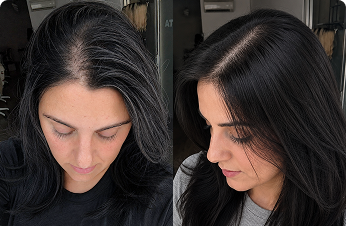
“I noticed my hair getting weaker and breaking more from all the straightening and heat. Since using SLEEQ regularly, it feels stronger, looks fuller, and I’m seeing way less breakage.”
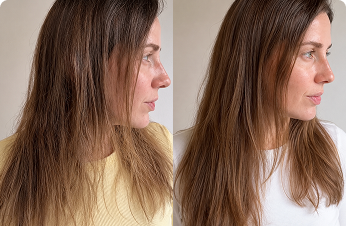
“My hair had so much breakage from straightening and frequent heat. After using SLEEQ regularly, it feels stronger, looks denser, and I’m noticing far less visible breakage.”
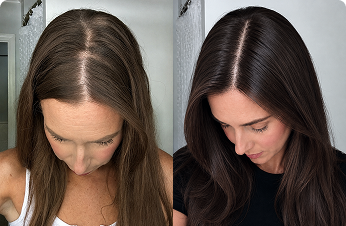
“Wearing wigs all the time made my hairline look thin and weak. Since using SLEEQ, it looks healthier and fuller.”
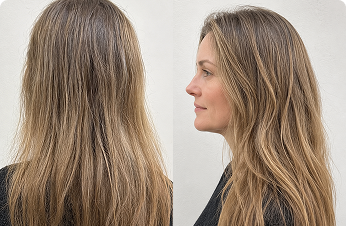
“Bleaching and styling made my hair dry and thin. Since using SLEEQ, it looks fuller and way healthier.”
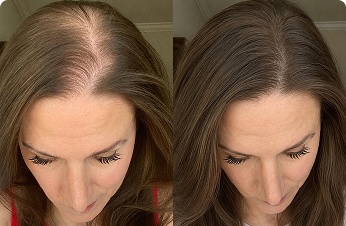
“I had a lot of breakage around my hairline. Since using SLEEQ, it looks much stronger.”


